
 EN
EN
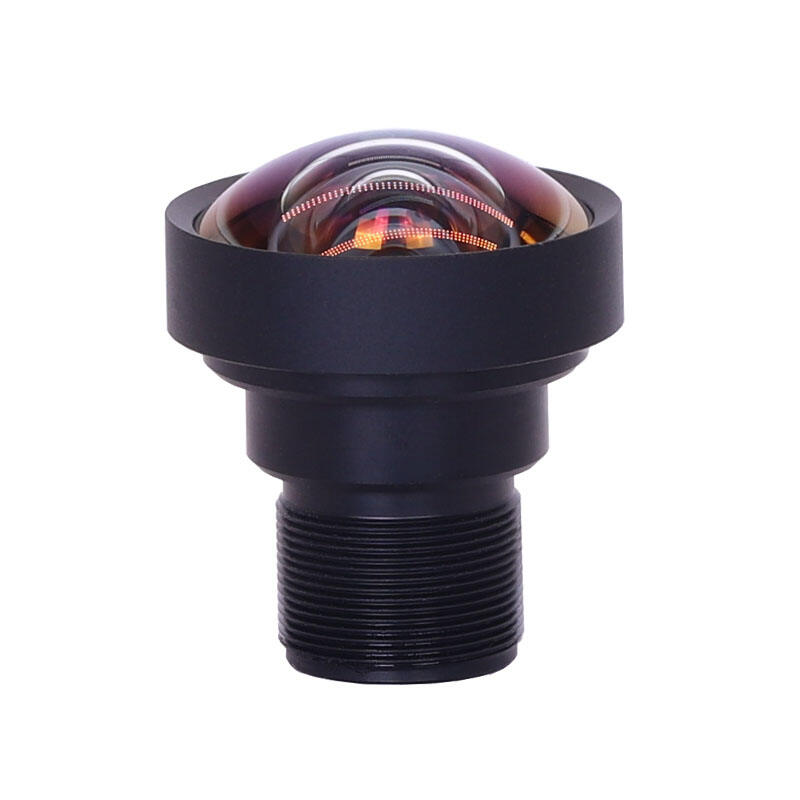
M12 Lens Fundamentals: Design, Standardization, and Optical Versatility
What Makes the M12 Mount Unique — Thread Spec, Flange Focal Distance, and Interchangeability
The standardized M12×0.5 threaded mount enables precise mechanical coupling between lenses and sensors across industrial cameras. This uniform interface maintains a consistent flange focal distance—typically under 8mm—ensuring optical alignment without recalibration when swapping lenses. Such interchangeability allows rapid adaptation to varying vision tasks, from macro inspections to wide-area monitoring. Unlike proprietary mounts, the M12 specification guarantees compatibility with diverse sensors, reducing integration costs by 30% according to industrial vision adoption studies (2023). Its compact thread design withstands vibration-intensive environments while facilitating modular upgrades across production lines.
Optical Performance Across Focal Lengths and Apertures — Resolving Power, Distortion Control, and Low-Light Adaptability
M12 lenses deliver exceptional imaging consistency through optimized optical configurations:
- Resolution: Maintains >5MP clarity across focal lengths (1.4mm–50mm) via multi-element designs correcting chromatic aberrations
- Distortion: Aspherical elements suppress geometric distortion to <0.8% even in wide-angle variants—critical for metrology applications
- Low-Light Performance: f/1.4–f/16 aperture ranges with high-transmission coatings enable clear imaging at 0.01 lux illumination
Specialized variants like liquid-lens modules achieve <10ms autofocus transitions for dynamic inspection scenarios. This versatility supports demanding industrial vision requirements, from high-speed bottling line checks to nocturnal robotic operations.
Core Industrial Advantages of the M12 Lens
Compact Size and Lightweight Design Enable Embedded Vision in Space-Constrained Environments
The M12 lens revolutionizes industrial imaging with its ultra-compact footprint—typically just 12mm in diameter—and weight under 20 grams. This miniature form factor allows seamless integration into robotics, drones, and portable inspection devices where spatial limitations prohibit bulkier optics. Despite their size, M12 lenses maintain high-resolution imaging (often exceeding 5MP), enabling precise defect detection on cramped assembly lines. Their lightweight construction reduces mechanical stress on robotic arms and aerial platforms while supporting edge computing in mobile applications. This combination of portability and optical precision makes M12 lenses indispensable for embedded vision systems operating in confined industrial settings like semiconductor cleanrooms or automotive undercarriage inspections.
Cost-Effective Scalability Through Standardized Manufacturing and Sensor Compatibility
Standardization of the M12 mount (M12×0.5 thread) drives significant cost efficiencies across industrial vision deployments. Uniform manufacturing specifications enable mass production, lowering per-unit costs by up to 60% compared to custom optics. The standardized interface ensures cross-compatibility with diverse global sensor suppliers, eliminating proprietary adapter expenses and simplifying maintenance. Production lines can scale vision systems rapidly by swapping M12 lenses across stations—a 2023 automation study showed factories reduced integration time by 45% using interchangeable lenses. This plug-and-play versatility, combined with economies of scale, allows manufacturers to deploy high-volume inspection networks without compromising optical consistency or inflating budgets.
High-Impact M12 Lens Applications Across Key Sectors
Machine Vision in Smart Factories: Real-Time Defect Detection on Automotive Assembly Lines
M12 lenses revolutionize automotive quality control through real-time defect detection. Their compact design integrates seamlessly into robotic vision systems scanning vehicle bodies on assembly lines. High-resolution optics identify sub-millimeter flaws like paint inconsistencies or misaligned components at production speeds. Industrial-grade construction withstands vibrations from machinery while maintaining optical precision. This prevents costly recalls by catching errors early—one manufacturer reduced warranty claims by 22% after implementation (Automation Quarterly 2023). Wide fields of view enable full-panel inspection without repositioning cameras, and infrared compatibility ensures consistent performance under variable factory lighting—key enablers of zero-defect manufacturing initiatives.
Autonomous Systems: Reliable Edge Imaging for Drones, Robotics, and ADAS Cameras
In autonomous systems, M12 lenses provide mission-critical imaging for drones, robotics, and ADAS (Advanced Driver Assistance Systems). Their vibration-resistant optics maintain clarity during drone flights over uneven terrain or robotic arm movements. Low-light sensitivity enables reliable operation in dawn/dusk conditions for delivery drones. For ADAS applications, the lenses support pedestrian detection and lane tracking through rapid focus adjustment between near-field obstacles and distant traffic. Standardized mounts allow quick swaps between wide-angle and telephoto configurations in field robotics. A recent study showed autonomous vehicles using M12 lenses achieved 40% faster hazard response times than conventional optics (Robotics Today 2024). Lightweight construction prevents payload strain on UAVs, while environmental sealing protects against dust and moisture ingress.
FAQ
What are the key advantages of using M12 lenses?
M12 lenses offer standardized mounting, high optical performance across various focal lengths and apertures, compact and lightweight design, and cost-effective scalability through mass production and sensor compatibility.
In what industries are M12 lenses typically used?
M12 lenses are widely used in machine vision, automotive assembly lines, robotics, drones, and advanced driver assistance systems (ADAS), among others.
How do M12 lenses contribute to cost savings?
The standardized manufacturing of M12 lenses allows for significant cost savings. By supporting mass production and ensuring compatibility with a variety of sensors, these lenses reduce the need for proprietary adapters and simplify maintenance, thus lowering per-unit costs.