
 EN
EN
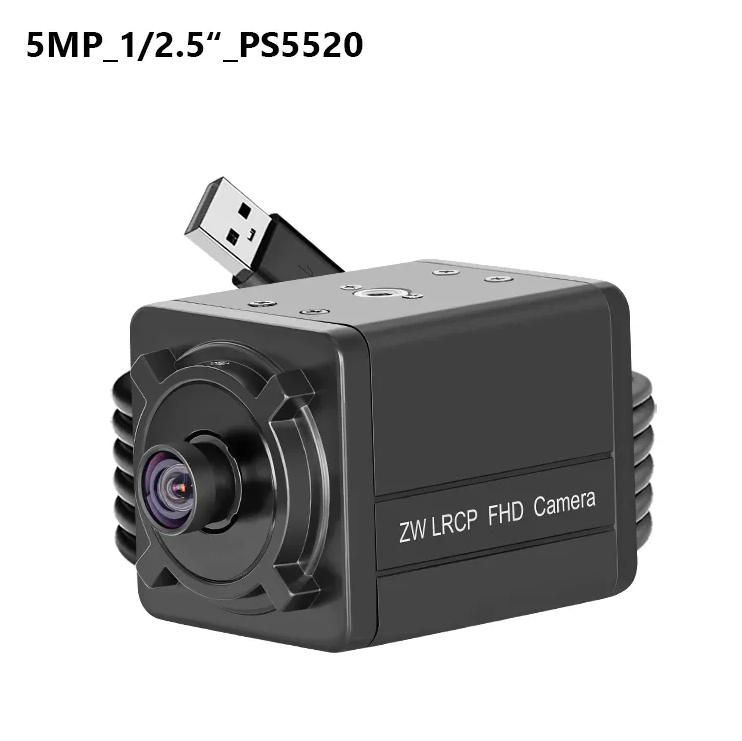
Superior Defect Detection with FHD Camera Resolution
Clarity at Sub-Millimeter Scale: Why FHD Enables Reliable Visual Inspection
Full High Definition (FHD) cameras capture 1920×1080 pixel resolution—delivering the sub-millimeter clarity needed to detect defects as small as 0.1 mm in industrial settings. This level of detail is essential for identifying micro-cracks in PCBs, surface flaws in automotive components, and material inconsistencies in pharmaceutical packaging. Unlike lower-resolution systems, FHD sensors resolve fine features without pixelation, reducing false negatives by 40% in controlled studies. The high pixel density ensures machine vision algorithms receive accurate, noise-resistant input data—directly improving defect recognition reliability. In semiconductor manufacturing, for example, FHD cameras routinely identify wafer impurities that would otherwise cause circuit failures and costly field recalls.
FHD vs. HD: Quantifying Gains in Feature Recognition and Measurement Accuracy
FHD cameras provide 2.25× more pixels than standard HD (1280×720), fundamentally enhancing measurement precision and feature recognition. This resolution advantage translates into measurable quality and efficiency gains:
| Metric | HD (720p) | FHD (1080p) | Improvement |
|---|---|---|---|
| Pixel Count | 921,600 | 2,073,600 | 125% ↑ |
| Minimum Defect Size | 0.25 mm | 0.10 mm | 60% finer |
| Dimensional Accuracy | ±0.3 mm | ±0.1 mm | 67% tighter |
The increased pixel count enables edge-detection algorithms to achieve 98% accuracy in identifying component misalignments—up from 82% with HD—eliminating ambiguity in precision machining and electronic assembly. Production lines using FHD systems report 30% fewer false rejects and 25% faster inspection cycles, confirming its operational superiority.
Operational Efficiency Gains from FHD Camera Deployment
Reducing False Rejects and Rework: Evidence from PCB and Automotive Lines
FHD deployment reduces false rejects by up to 40% in PCB manufacturing, where 1080p resolution captures microscopic solder cracks and component misalignments invisible to HD systems—preventing functional boards from being wrongly scrapped while reliably flagging true defects like cold joints. Similarly, a leading automotive manufacturer cut rework labor by 30% after adopting FHD-based visual inspection for paint quality control. Fewer false positives directly improve material yield and reduce waste disposal costs.
Fewer Cameras, Broader Coverage: Optimizing Layout and Total Cost of Ownership
FHD cameras deliver 60% wider coverage per unit than HD alternatives—without sacrificing detection accuracy. A single high-resolution camera can monitor multiple conveyor sections or assembly stations, eliminating redundant hardware. This consolidation lowers capital expenditure, installation complexity, and ongoing maintenance: fewer lenses require calibration, and fewer housings need servicing. For instance, a tier-1 electronics plant reduced its vision system footprint by 14 cameras after switching to FHD—achieving a 22% lower total cost of ownership over three years. The broader field of view also minimizes blind spots across large-scale production environments.
Real-Time Monitoring and Remote Diagnostics Enabled by FHD Camera Streams
Low-Latency 1080p Streaming for 24/7 Process Oversight and Rapid Response
FHD cameras support 1080p resolution at 60 fps with sub-second latency—critical for capturing transient events such as micro-cracks on moving conveyor belts or soldering anomalies during electronics assembly. Production lines leverage these low-latency streams for continuous oversight, slashing machine downtime by 18% through instant anomaly detection (Manufacturing Tech Journal, 2023).
Remote teams use pixel-level clarity to inspect PCB traces, weld seams, or other critical features without physical access. Automotive plants, for example, integrate FHD streams with AR overlays to guide technicians through calibration errors—reducing resolution-dependent diagnostic mistakes by 27%. Importantly, 1080p delivers this fidelity with bandwidth efficiency: unlike 4K, it streams reliably over existing industrial networks, avoiding costly infrastructure upgrades.
FHD Camera Integration: Edge Intelligence vs. Traditional Machine Vision
Integrating FHD cameras increasingly hinges on choosing between edge intelligence and traditional machine vision architectures. Traditional setups route video to centralized processing units—a design vulnerable to latency and bandwidth bottlenecks. Edge intelligence embeds real-time analytics directly within the FHD camera or adjacent hardware, enabling decisions in under 5ms for critical defects like micro-fractures or soldering flaws. This architecture reduces network load by up to 70% versus cloud-dependent systems and maintains inspection continuity during network outages—vital in high-speed production, where delayed defect detection can cost $740k per hour in scrap and downtime (Ponemon Institute, 2023).
| Architecture | Latency | Network Dependency | Use Case Fit |
|---|---|---|---|
| Traditional Machine Vision | 50–100 ms | High | Static, high-precision QC |
| Edge Intelligence with FHD | <5 ms | Minimal | High-speed dynamic lines |
Edge-enabled FHD systems also scale efficiently: adding cameras doesn’t require expensive central server upgrades. Automotive assembly lines using this approach achieved 30% faster throughput while sustaining 99.98% defect recognition rates—demonstrating how localized computation unlocks both speed and precision.
FAQ
Q: What is the resolution of FHD cameras?
A: FHD cameras provide a resolution of 1920×1080 pixels, ensuring high clarity and detail in visual inspections.
Q: How do FHD cameras compare to HD cameras in detecting defects?
A: FHD cameras offer 2.25× more pixels than HD cameras, enabling them to detect defects as small as 0.1 mm, compared to HD’s limit of 0.25 mm.
Q: Can FHD cameras improve operational efficiency?
A: Yes, FHD cameras reduce false rejects, improve detection accuracy, and cover wider areas, which collectively enhance operational efficiency and reduce costs.
Q: How are FHD cameras beneficial in high-speed production environments?
A: FHD cameras with edge intelligence enable real-time analytics with latency under 5ms, making them ideal for high-speed production where quick defect detection is crucial.
Q: Do FHD cameras require additional network infrastructure?
A: No, FHD cameras deliver high-resolution streams efficiently over existing networks without necessitating costly infrastructure upgrades.