 EN
EN
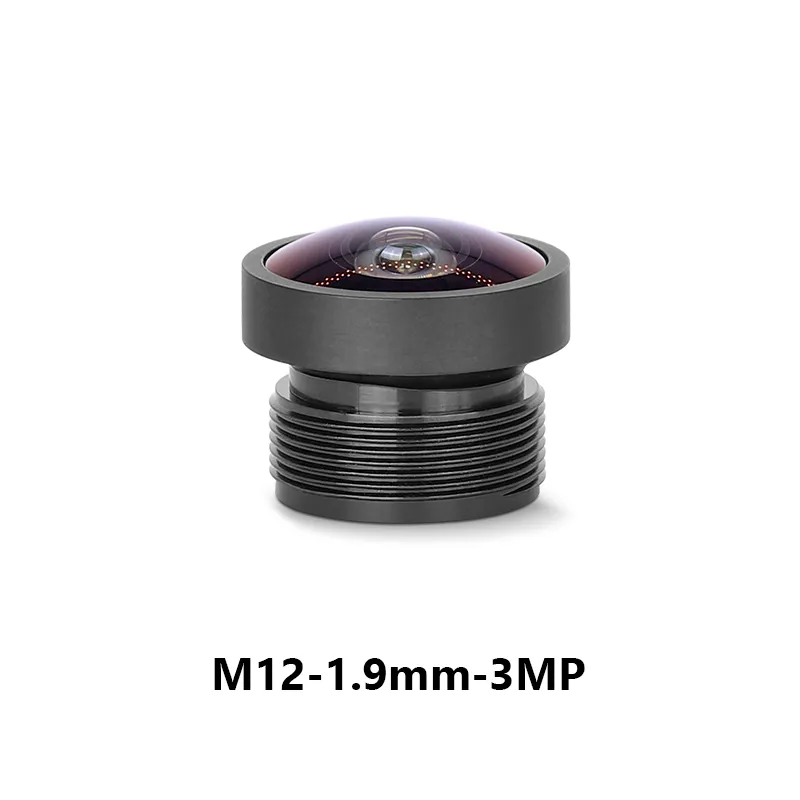
Why M12 Lens Supplier Choice Directly Impacts Optical Performance
Selecting an M12 lens supplier directly influences optical performance through manufacturing precision and material science. Industrial camera systems demand micron-level accuracy to maintain image quality across thousands of units—where even minor deviations cascade into significant performance degradation.
Supplier consistency and process control in mass production: Effects on optical yield and defect rates
Robotic assembly lines with statistical process control (SPC) reduce optical axis deviation below 0.03°, directly improving yield rates. Manufacturers implementing automated optical inspection (AOI) achieve defect rates under 0.2%, well below the industry average of 1.5–2%. Tight process control prevents decentering errors (causing asymmetric blur), surface scratches (increasing light scatter), and cementing voids (generating internal reflections). A single batch with 0.5° tilt error can compromise 15% of machine vision installations. Suppliers maintaining ISO 9001-certified calibration protocols demonstrate 98% first-pass yield in high-volume production.
Material sourcing, AR/IR coating precision, and their measurable impact on MTF, transmission, and spectral stability
Optical glass composition determines fundamental performance. High-index low-dispersion (H-LD) materials deliver >90% transmission from 400–900 nm—versus 82% for standard equivalents. Precision anti-reflective (AR) and infrared (IR) coatings applied via ion-assisted deposition boost modulation transfer function (MTF) by 15% at 50 lp/mm, suppress ghost images to <0.3% luminosity, and limit spectral shift to under 5 nm after thermal cycling.
| Parameter | Standard Coating | Precision Coating | Impact |
|---|---|---|---|
| Reflection Loss | 1.5% per surface | 0.2% per surface | Increases light transmission |
| Wavelength Shift | ±15nm | ±5nm | Stabilizes color reproduction |
| Environmental Durability | 48h salt spray | 500h salt spray | Extends field service life |
Coating thickness variations exceeding ±3% degrade MTF by up to 20%, especially at critical infrared wavelengths used in industrial vision. Consistent material and coating selection ensures optical stability across –40°C to +85°C operating ranges.
Assessing Core Technical Capabilities of an M12 Lens Supplier
Tolerance rigor: Why ±0.01 mm concentricity and <0.5 µm surface roughness are non-negotiable for sensor-lens alignment
Every pixel count demands extreme optical precision. Concentricity deviations beyond ±0.01 mm shift the optical axis relative to the sensor—inducing edge blur and asymmetric vignetting. Surface roughness above 0.5 µm scatters light, reduces contrast, and degrades MTF. For high-resolution sensors (e.g., 12 MP or larger), these tolerances determine whether the lens resolves fine details across the full field. Reliable suppliers enforce them through precision diamond turning and CNC polishing, with 100% inspection using laser interferometry. Without such rigor, even a well-designed lens fails to meet datasheet performance in volume production.
Certifications as validation: How ISO 9001 and IATF 16949 signal robust metrology, traceability, and repeatability
Tolerances on paper mean little without a quality management system that ensures every batch meets the same standard. ISO 9001 certification verifies documented processes for incoming material inspection, in-process control, and final testing. IATF 16949—the automotive-grade standard—adds stricter requirements for risk management, change control, and full traceability from raw glass to final assembly. For camera module OEMs, these certifications confirm the supplier’s ability to deliver consistent performance across millions of units and reduce buyer audit burden, as third-party validation already covers metrology equipment calibration and defect tracking—critical when scaling from prototype to volume production.
Evaluating Real-World Supply Chain Reliability for M12 Lens Suppliers
Lead time predictability, regional manufacturing footprint (e.g., Shenzhen vs. Dresden), and JIT readiness for camera module OEMs
Consistent lead times prevent production bottlenecks—suppliers achieving >95% on-time delivery reduce assembly line stoppages by 40%. Regional manufacturing footprints offer distinct advantages: Shenzhen-based partners support rapid iteration cycles ideal for prototyping, while Dresden facilities deliver precision-grade outputs aligned with ISO 13485 medical standards. JIT-ready operations must demonstrate inventory turnover ratios exceeding 8x annually, buffer stock thresholds below 15% of monthly demand, and multi-modal logistics integration for air/sea freight alternatives. OEMs report 34% fewer stockouts when suppliers maintain dual-region production capacity—mitigating regional disruptions while meeting varying compliance requirements. Real-time production tracking via API-integrated visibility tools is essential; vendors lacking this capability increase safety stock costs by 22% on average.
Commercial Alignment: Beyond Specs — Support, Scalability, and Partnership Fit for Your M12 Lens Needs
Technical specifications alone cannot guarantee success when selecting an M12 lens supplier—commercial alignment transforms transactional relationships into strategic advantages. Prioritize partners offering dedicated engineering support for prototyping and troubleshooting, reducing integration delays by up to 30%. Scalability capacity must match your roadmap: verify tier-one suppliers maintain buffer stocks exceeding 15% of annual order volume while accommodating ±20% quarterly demand fluctuations without quality erosion. Crucially, assess cultural fit through pilot projects; suppliers proactively sharing DFM (Design for Manufacturability) insights typically demonstrate 40% higher long-term partnership retention. This alignment minimizes supply chain vulnerabilities while ensuring your embedded vision systems evolve with market needs—a critical differentiator when scaling industrial automation deployments.
Frequently Asked Questions (FAQs)
Why is supplier choice critical for M12 lens optical performance?
Supplier choice impacts manufacturing precision, material selection, and consistency, all of which are essential for maintaining high-quality optical performance.
What certifications should a reliable M12 lens supplier have?
ISO 9001 and IATF 16949 certifications indicate robust quality management, traceability, and repeatability in production processes.
How do coating variations affect MTF and spectral stability?
Coating thickness variations beyond ±3% can degrade MTF by up to 20% and cause spectral shifts, especially at critical infrared wavelengths.
What are the benefits of suppliers with regional manufacturing footprints?
Regional manufacturing footprints, like Shenzhen for prototyping and Dresden for precision-grade outputs, help OEMs strike a balance between speed and quality while avoiding regional disruptions.
Why cultural alignment with suppliers matters for M12 lens procurement?
Cultural alignment ensures effective communication, proactive sharing of DFM insights, and higher long-term partnership retention rates.
Table of Contents
- Why M12 Lens Supplier Choice Directly Impacts Optical Performance
- Assessing Core Technical Capabilities of an M12 Lens Supplier
- Evaluating Real-World Supply Chain Reliability for M12 Lens Suppliers
- Commercial Alignment: Beyond Specs — Support, Scalability, and Partnership Fit for Your M12 Lens Needs
-
Frequently Asked Questions (FAQs)
- Why is supplier choice critical for M12 lens optical performance?
- What certifications should a reliable M12 lens supplier have?
- How do coating variations affect MTF and spectral stability?
- What are the benefits of suppliers with regional manufacturing footprints?
- Why cultural alignment with suppliers matters for M12 lens procurement?